
The Definition of “Normal” Is Shrinking. The Fallout Is Everywhere.
By Jacqui Byrne
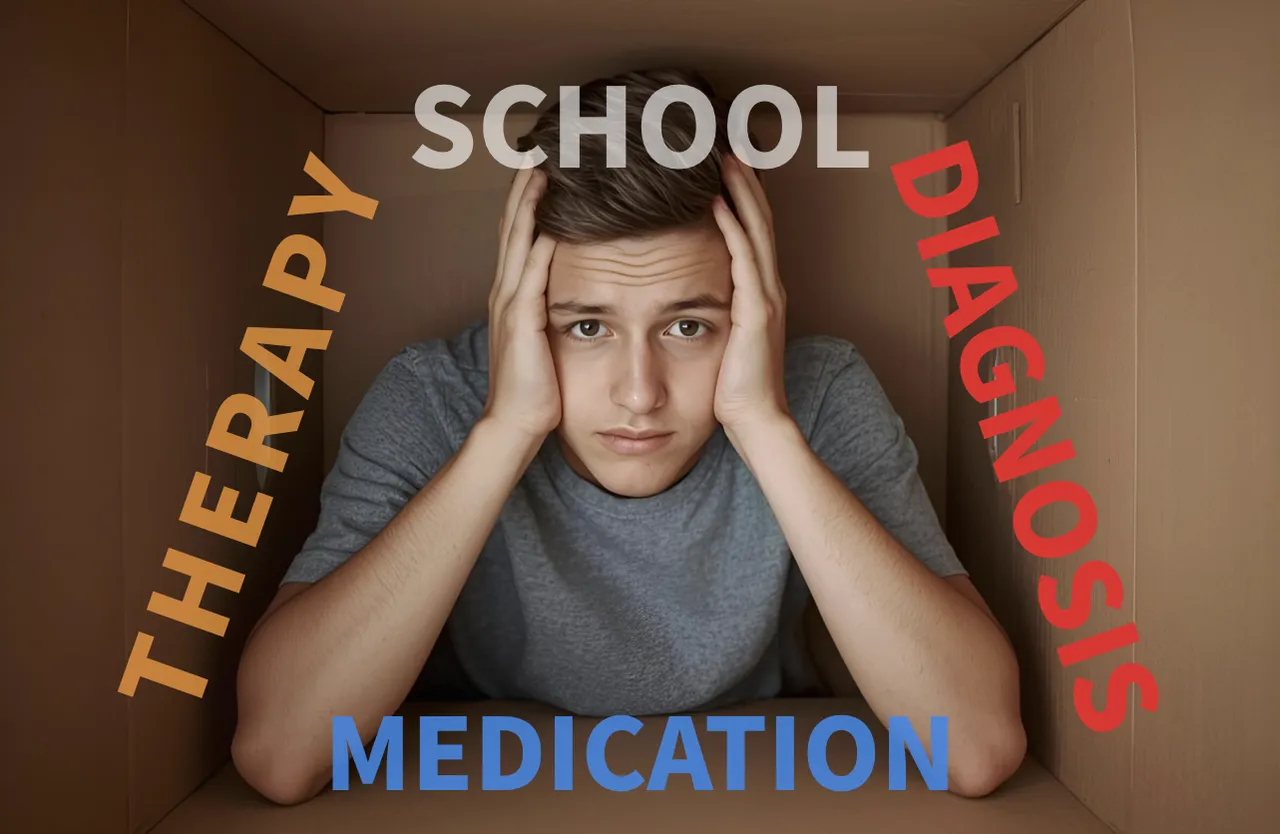
There’s a growing national conversation—reflected in recent articles in both The New York Times Magazine and The Wall Street Journal (paywall)—about how students are being pulled into a vast and expanding system of diagnoses, medications, therapies, and interventions just to be able to make it through the typical school day. And sometimes all of that still doesn’t work, leaving some families little choice but to opt out of the whole system and seek alternatives.
For many families, these supports are a lifeline. But it’s worth asking: why are they needed at this scale?
I’ve had a front-row seat to just how rapidly this issue has accelerated: I founded a tiny private school 11 years ago, for just seven kids who felt too stifled by the conventional school system. Within six years, that school had grown to three campuses.
It’s been an incredible thing to witness—but also a sobering one. Because when this many students and families need something fundamentally different, it raises a difficult question: Can we really keep calling them outliers?
Despite the best efforts of parents and educators, over the past few decades, the range of what’s considered acceptable has been shrinking. Expectations for how students should behave, learn, and perform have grown narrower and less developmentally responsive. A child who craves physical movement, thinks out loud, works slowly, or resists rote instruction doesn’t just feel out of place—they often become the focus of concern. The result is a system that flags more and more students as having “differences.”
And difference, in today’s schools, is often what gets medicalized.
But does the surge in diagnoses accurately reflect a commensurate surge in medical need? Before we make that assmption, let’s consider this: A formal diagnosis is often a requirement for a student to access support—which may lead more families to seek one.
The scale of this issue tells us something important. It tells us we’re not dealing with individual outliers—we’re dealing with a structural mismatch.
At FlexSchool, our students are twice-exceptional (2e)—gifted kids with learning or other challenges. And the methods we’ve developed to meet their complex needs can benefit all students. Public school districts with rapid increases in behavior and social challenges among students hire us to train their leaders, teachers, and staff to create environments where all students can thrive. It is a challenging cultural shift, but the payoff is huge—for students, and for the districts that don't have to pay to send those students to an out-of-district school.
I’m encouraged to see more public school systems reevaluating and being open to change. They’re recognizing that what we’ve come to treat as disorders are often just common variations in human development, colliding with a system that has become too rigid. The demand for different approaches is no longer fringe—it’s widespread.
And that means it’s time to stop treating student needs as exceptions to be managed—and start treating them as design data. When we do, a different set of decisions becomes possible:
- We can redesign routines rather than trying to redesign students.
- We can anticipate challenges instead of reacting to them.
- We can make support systemic, rather than student-specific.
Instead of treating more and more kids as exceptions, let’s make room for a new norm—one built for all students.
For free tools and resources to improve your 2e child’s experience, visit 2e 101.
To receive our latest posts, expert interviews and more, sign up to stay in touch!
Interested in applying to FlexSchool today? Get started!
Do you know someone who could benefit from learning more about 2e? Please invite them to visit the links below!
Take the 2e Quiz | Visit 2e 101 | Subscribe | Facebook | Instagram
Jacqui Byrne, FlexSchool Founder
Jacqui Byrne is the visionary behind FlexSchool – a network of small schools specifically designed to engage and support the creative, quirky, asynchronous minds of gifted and twice-exceptional (2e) students. An acknowledged expert and sought-after speaker on education, Jacqui is a member of the Bridges Graduate School Advisory Council and holds a degree from Yale University. She is also the parent of twice-exceptional kids.