Why Community Matters for Gifted & Twice-Exceptional Students
Families of gifted and twice-exceptional students often evaluate schools through an academic lens, seeking the right combination of intellectual rigor and support for learning challenges. Over time, many realize that another factor carries equal weight: community.
How students experience peer relationships and adult understanding can shape their engagement at school and whether they feel comfortable and confident enough to show up fully as themselves. For gifted and twice-exceptional students, community is not an add-on to academics. It is the foundation that allows learning, confidence, and friendship to grow.
What Does “Community” Mean in a School Setting?
In a school context, community refers to the quality of relationships among students, educators, and families—and the shared values that guide how those relationships are built and maintained.
A strong school community:
- Fosters a sense of belonging and emotional safety
- Encourages students to be authentic rather than performative
- Responds proactively to social and emotional needs
- Celebrates differences instead of asking students to hide them
For gifted and twice-exceptional students, community means more than fitting in. It means being able to show up as they are—intellectually curious, emotionally intense, neurodivergent, creative, sensitive, asynchronous—and knowing that those traits are valued rather than misunderstood.
Why Community Is Especially Important for Gifted and Twice-Exceptional Students
The Social Reality Many Families Recognize
Many gifted and 2e students struggle socially in traditional school environments, even when they are academically capable or excelling. Parents often describe children who:
- Feel out of sync with same-age peers
- Struggle with social anxiety, rigidity, or emotional regulation
- Have intense interests that are not shared or encouraged
- Mask their differences to avoid standing out
It is often reported that these challenges lead to loneliness, school avoidance, or a gradual erosion of confidence. Over time, even strong academic ability may be overshadowed by stress or disengagement.
How the Right Community Changes a Child’s Experience
When gifted and twice-exceptional students are placed in an environment designed for their needs, something shifts.
In a supportive community:
- Students no longer expend extra effort and energy masking inherent traits and qualities to “fit in”
- Peer relationships are built on authentic shared interests and values
- Social growth is explicitly and holistically supported, not left to chance or disregarded
- Confidence and emotional resilience increase alongside academic engagement
When students are welcomed by peers, faculty, and the leadership community becomes the structure that allows learning and friendship to flourish.
What Makes a Strong School Community (and What Parents Should Look For)
Intentional Community vs. Accidental Community
Not all school communities are created intentionally. In many settings, social development is assumed to “work itself out.” When challenges arise, support is often reactive rather than proactive.
An intentional community, by contrast:
- Is built with purpose and forethought
- Embeds social-emotional learning into daily life
- Trains faculty to understand diverse learner profiles
- Creates systems of support before problems escalate
For gifted and twice-exceptional students, intentionality matters. These students benefit most from environments where adults understand the nuance of their social and emotional development and guide it thoughtfully.
Key Elements of a Healthy School Community
Parents evaluating schools may want to look for:
- Small class sizes that allow students to be known as individuals
- Faculty trained in gifted and 2e education, not just subject matter
- Integrated counseling support available during the school day
- A culture of inclusion where differences are recognized and respected
- Clear communication between school and families
- Structured social opportunities designed around student strengths and interests
These elements signal that community is a priority, not an afterthought.
How Parents Know Community Is Working
Families often notice meaningful changes when their child is in the right community. Parents describe students who:
- Are more confident and engaged
- Talk about friends with excitement
- Feel understood rather than “different”
- Look forward to school instead of dreading it
These shifts reflect the power of a community designed with gifted and twice-exceptional learners in mind.
How to Know If a School’s Community Is Right for Your Child
As parents evaluate options, it can be helpful to ask schools:
- How do you support friendship development?
- What happens when social challenges arise?
- How are differences acknowledged and celebrated?
- How do counselors, teachers, and families collaborate?
The answers to these questions often reveal whether a school’s community is truly aligned with a child’s needs.
How FlexSchool Builds a Meaningful Peer Community
FlexSchool serves students nationally through its three campuses:
- Berkeley Heights, NJ, offering grades 2–12+ (in person)
- Westchester County, NY, offering grades 5–12+ (in person)
- Virtual Cloud Campus, offering 100% live virtual classes to students in grades K-12+
Across all settings, the approach to community remains consistent and intentional.
A Holistic Admissions Process Focused on Fit
Community begins before a student ever enters the classroom. FlexSchool’s holistic admissions process looks beyond test scores and transcripts to understand the whole child.
Admissions considers:
- Learning style and academic needs
- Social-emotional profile
- Strengths, challenges, and interests
- Alignment between the student, family, and school values
This careful approach helps create balanced cohorts where students are more likely to connect authentically with peers and feel a sense of belonging as they settle in.
Licensed Counselors as an Integrated Part of School Life
A defining feature of FlexSchool’s community is the presence of licensed counselors on every campus. Rather than operating on the margins, counselors are embedded in the daily life of the school.
They support students independently and in maturity-appropriate groups with:
- Navigating friendships and peer dynamics
- Emotional regulation and stress management
- Conflict resolution and communication skills
- Transitions, challenges, and personal growth
This proactive model ensures that social-emotional development is supported consistently, not only during moments of crisis.
Faculty Trained to Understand Gifted and Twice-Exceptional Learners
Teachers play a central role in shaping community. At FlexSchool, faculty are trained to understand:
- Asynchronous development
- Neurodiversity and executive functioning differences
- The social nuances of giftedness
- How to foster inclusive, respectful classroom cultures
Because educators recognize both the strengths and vulnerabilities of gifted and twice-exceptional students, they are able to guide peer interactions with empathy, clarity, and skill.
Friendship at FlexSchool: How Students Find Their People
Small Learning Communities Foster Trust and Belonging
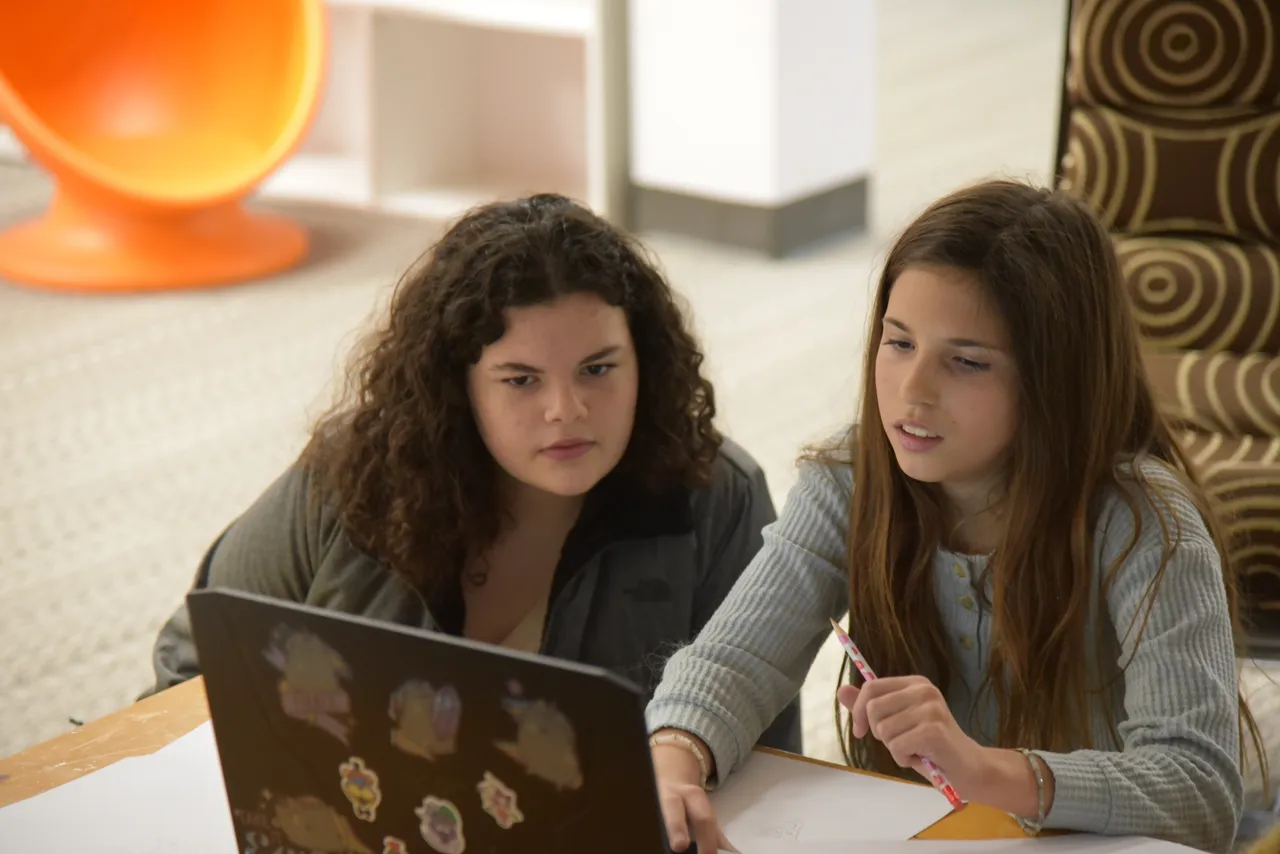
Whether in-person or online, FlexSchool emphasizes small learning environments. This allows students to:
- Be known and valued as individuals
- Practice social skills in a safe, supportive setting
- Build trust with peers and adults over time
For many students, this is the first time school feels like a place where they truly belong.
Shared Interests & Intellectual Abilities Create Natural Connections
One of the most powerful aspects of FlexSchool’s community is how friendships form organically around shared interests among intellectual peers. Students connect through:
- Innate curiosity
- Creative pursuits
- Thoughtful discussion and collaboration
Rather than feeling pressure to conform socially, students are encouraged to explore who they are—and to connect with peers who appreciate those same qualities. FlexSchool connects students over shared interests in a variety of ways including:
- Enrichment Clusters: FlexSchool provides structured time blocks for students to take deep dives into shared interests—ranging from community service to FlexFilm to the Beekeeping Guild and more. Adults facilitate rather than instruct, while students take the lead and collaborate to tackle a real-world problem or create a product for an authentic audience.
- Student Clubs: Clubs are created by and for students and meet in-person and virtually so that students from any campus can connect over shared interests like Minecraft, Chess, and more.
- Seminar: Students meet weekly in small groups led by certified counselors to process their social-emotional experience among developmental peers and practice skills like perspective taking, effective communication, and respectful debate.
- Town Hall: Each campus meets for regular Town Hall gatherings to discuss campus updates and allow for students to contribute to helping hone their campus communities into welcoming, inclusive spaces for all.
- Student Council: In addition to Town Hall, interested students can participate in their campus’s Student Council and help to plan field trips, fundraising events, and spirit weeks.
Through these examples, FlexSchool not only provides students with opportunities to connect but also to take an active part in shaping campus communities.
Community Across Campuses—and Online
In-Person Community in New Jersey and New York
FlexSchool’s campuses in Berkeley Heights, NJ, and Westchester County, NY share a common philosophy centered on inclusion, connection, and respect. While each campus is responsive to the needs of its unique students, families can expect:
- Consistent values and community norms
- Strong relationships between students and faculty
- A culture that prioritizes emotional safety and growth
Building Community in the Virtual Cloud Campus
FlexSchool’s K–12 Cloud Campus extends this same intentional approach to students nationwide. Community in a virtual environment is built through:
- Small, live, and interactive classes
- Purposeful collaboration and discussion
- Ongoing opportunities for peer connection, like after-school clubs and lunch get-togethers
Students are not passive participants—learning and community building are synchronous, and they are active members in a way that transcends geography.
At FlexSchool, community is not an abstract ideal. It is intentionally designed, carefully supported, and woven into every aspect of school life through holistic admissions, trained faculty, embedded counseling support, and learning environments where differences are not just accepted—but valued.
If you are exploring schools and wondering whether your child will truly belong, community is the place to start. Learn how FlexSchool’s intentional community supports gifted and twice-exceptional students nationwide.
Explore our campuses, support programs, and approach to education—or connect with our admissions team to see if FlexSchool is the right fit for your child.